The Sideline Is Not a Spectator's Waiting Room
Rugby sideline support is more useful when helpers handle equipment, access and matchday tasks without crowding the bench or taking over team duties.
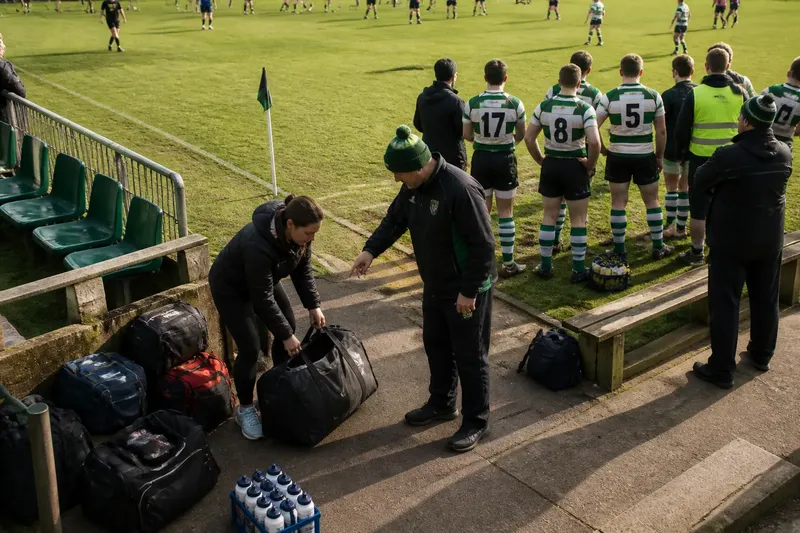
The common mistake in rugby sideline support is assuming that a quiet touchline means nobody is helping. The cost is often practical: kit goes missing, the bench entrance gets blocked, or a player has to search for the person responsible for a simple task. Useful support is less about filling the air and more about making the matchday run smoothly.
At a club match, the work is easy to overlook. Someone needs to keep track of bags, make sure the team area stays usable and help gather belongings afterward. Those jobs matter, but they work best when the person doing them knows the club’s boundaries and does not step into responsibilities reserved for coaches, players or officials.
What does rugby sideline support actually involve?
Rugby sideline support covers practical help around the team, not an extra layer of tactical direction. A volunteer might organize equipment, watch for a substitution request if assigned, or help a team manager keep the area orderly. Spectators can contribute by following club instructions and supporting the team without trying to manage the match.
Before kickoff, ask the coach or team manager where helpers should stand and what tasks are useful. Confirm who is responsible for equipment, substitutions and any matchday arrangements. Clubs and competitions can have different procedures, so follow the instructions given for that fixture.
If no task has been assigned, keep the route to the bench clear and leave equipment where the team expects it. Do not move another person’s belongings or enter a restricted area just because it looks untidy. Ask first; the sideline is not improved by a surprise reorganization.
Which practical tasks help most?
Specific, modest jobs are easier to do well than a vague promise to help with anything. Before the match, the team manager can identify what is needed and who should handle it. During play, stick to tasks that have been agreed and do not require stepping into the field of play.
- Check whether the entrance to the team area is clear; if it is blocked, ask the team manager before moving items, then use the designated storage area.
- Check that shared equipment is in its agreed place; if something is missing, tell the person responsible rather than searching through players’ belongings.
- Check whether a helper has been assigned to monitor substitution requests; if nobody has, ask the team manager whether the role is needed instead of assuming it.
- Check where players should leave bags and coats; if the location is unclear, ask before relocating anything, then keep the walkway unobstructed.
- Check whether the team needs help collecting kit after the match; if the manager confirms it, gather only the items assigned to you, and leave personal belongings for their owners.
- Check whether a player or staff member is already handling a practical task; if someone is responsible, offer help only if asked, then avoid creating a second version of the job.
These checks are ordinary matchday housekeeping, not a reason to hover over players. Once your task is complete, step back and let the team use its own space.
How should supporters handle their place by the pitch?
Use the spectator areas designated by the club or competition, and keep away from spaces set aside for players, staff and officials. If markings or boundaries are unclear, ask a club official before choosing a place to stand. A clear boundary protects access and prevents avoidable confusion.
Supporters can acknowledge effort, good teamwork and sportsmanship without calling specific tactical decisions. If a player is upset after an error, a detailed replay from the touchline is unlikely to help. Give the player room to reset and let the coach or teammates handle any discussion that belongs to them.
How do helpers handle common sideline questions?
Can a parent take over a team task?
Only if the coach or team manager asks them to, and the task fits the club’s arrangements. Otherwise, ask who is responsible and offer practical help without changing the plan.
What should a helper do if the bench area is crowded?
Check with the team manager before moving equipment or belongings. If asked to clear space, move only the items identified and place them where the team has agreed.
Should supporters call instructions to players?
Supporters can cheer effort and acknowledge good play, but tactical direction should follow the team’s arrangements. If you are not responsible for coaching, leave decisions to the players and coaches.
What if nobody has explained where to stand?
Ask a club official or team manager before settling near the team area. If the permitted spectator space is still unclear, choose a place away from restricted areas until someone can clarify it.
What does useful sideline support look like in practice?
Say you are helping at a junior club match. The starting point is a crowded bench entrance, with kit bags belonging to several families and no permission to move them; you ask the team manager, who directs you to a storage spot behind the designated seating area. You carry only the bags the manager identifies and place them there, leaving personal items untouched. The visible result is an open route to the bench, while the tradeoff is that you spend time checking rather than clearing everything at once.
Rugby sideline support is most effective when each person knows what they are responsible for and respects what belongs to someone else. Ask before acting, keep access clear, and finish the assigned job without turning it into a larger one. That leaves the team area ready for the people who need to use it.